Wedding Academy | Wedding Flowers by Season: A Florist's Guide to Choosing and Substituting Blooms
Founder's offer: $197 per certificate + a free second certificate — see the certificates2:00:00
Chat on WhatsApp

Wedding Flowers by Season: A Florist’s Guide to Choosing and Substituting Blooms

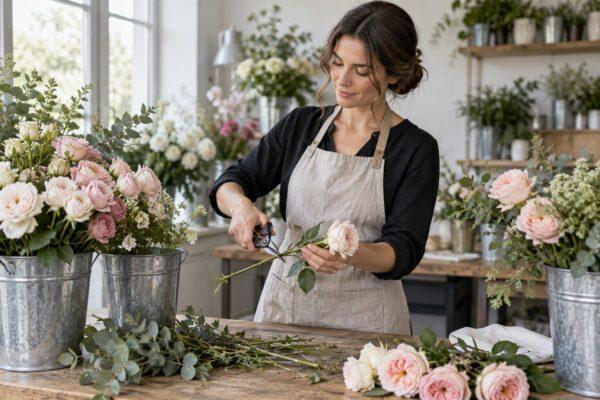
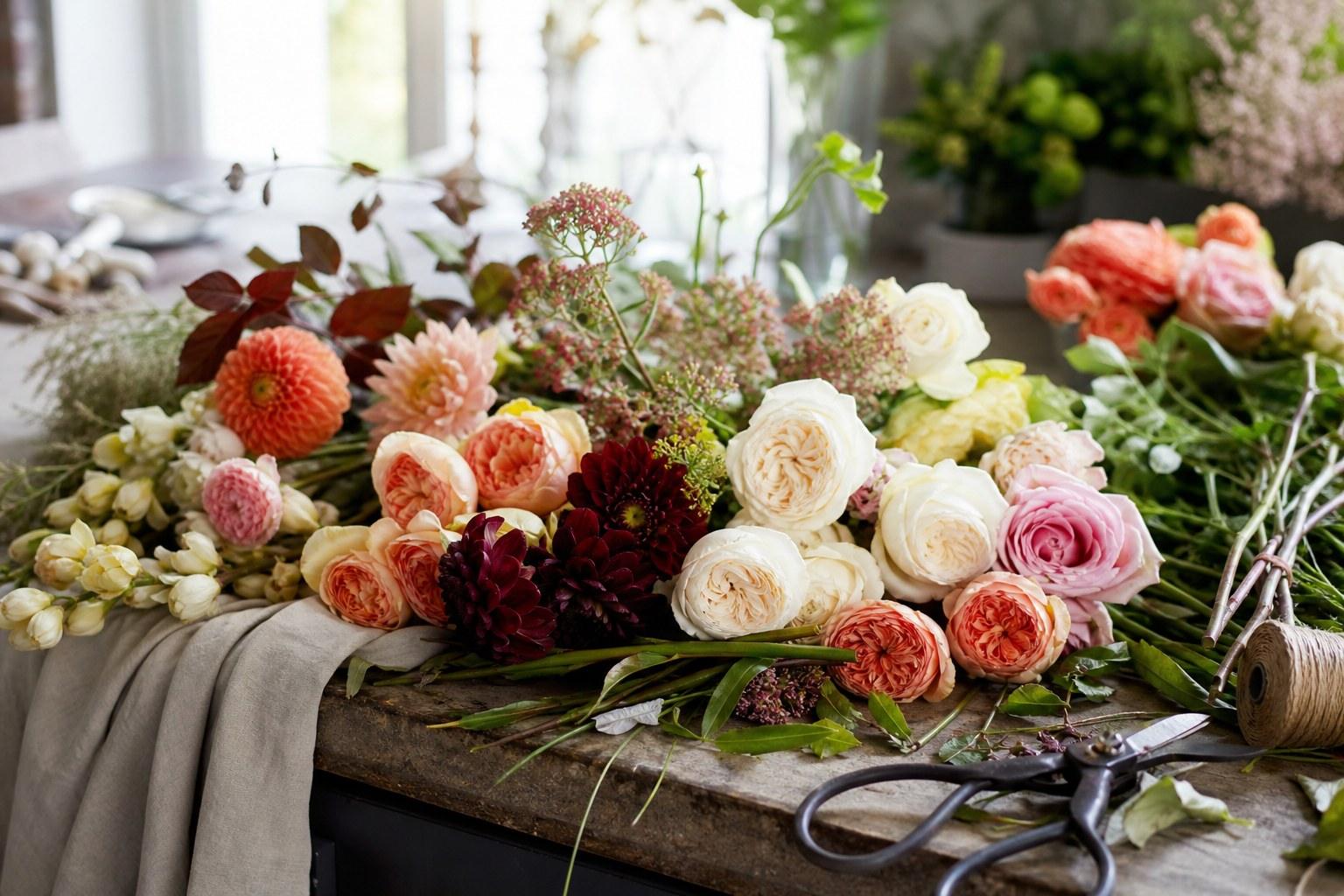
Seasonal wedding flowers arranged on a florist workbench with roses dahlias and foliage
written by

Jac

A couple sends you an image of a bouquet stuffed with peonies. Their wedding is in March. In the southern hemisphere. You now have a choice: import them at a cost that will eat the entire floral budget, quietly substitute and hope nobody notices, or have an honest conversation about seasonality.

Choosing wedding flowers by season is the single biggest lever a florist has over cost, quality and stress. In-season blooms are fresher, cheaper, more available and far more likely to survive a hot day. Out-of-season blooms are none of those things.

Here’s how to think about seasonal wedding flowers, how to substitute without losing the look, and how to have the conversation with couples. If you want the craft behind it, our Certificate in Floral Design teaches mechanics, conditioning and design.

Why seasonal wedding flowers matter

  • Cost. Out-of-season stems are imported, air-freighted or grown under glass. Every one of those adds cost before you’ve touched a pair of secateurs.
  • Availability. Even with budget, a wholesaler cannot conjure a variety that isn’t being harvested. Late substitutions are the norm, not the exception.
  • Vase life. A stem that travelled for days arrives with less life left in it — a serious problem for a wedding that starts at 2pm and finishes at midnight.
  • Heat tolerance. Delicate spring blooms in a summer marquee will collapse. Season and climate are the same conversation.
  • Look. Seasonal arrangements simply read as more natural. Everything in them belongs to the same moment.
  • Note the geography trap: most wedding inspiration online is northern-hemisphere. If you’re in Australia or New Zealand, a “June wedding” pin is a winter wedding to you. Always translate the season before you translate the flowers.

    Wedding flowers by season: what to expect

    Availability varies by climate, country and grower, so treat this as a starting point and confirm with your local wholesaler every single time.

    SeasonTypically abundantDesign character
    SpringRanunculus, tulips, anemones, sweet pea, blossom branches, lilac, freesiaSoft, movement-led, pale and fresh
    SummerGarden roses, dahlias, hydrangea, delphinium, zinnia, jasmine, herbsFull, generous, saturated colour
    AutumnDahlias, chrysanthemum, amaranthus, seed heads, berries, turning foliageTextural, warm-toned, sculptural
    WinterHellebores, anemones, ranunculus, evergreen foliage, dried elements, camelliaDeep, restrained, structural

    Some flowers — roses, chrysanthemums, carnations, orchids, lisianthus, gypsophila and much foliage — are farmed year-round and available almost always. They are the backbone of a reliable wedding recipe. Build your structure from those, then use genuinely seasonal stems as the accents that give the arrangement its personality.
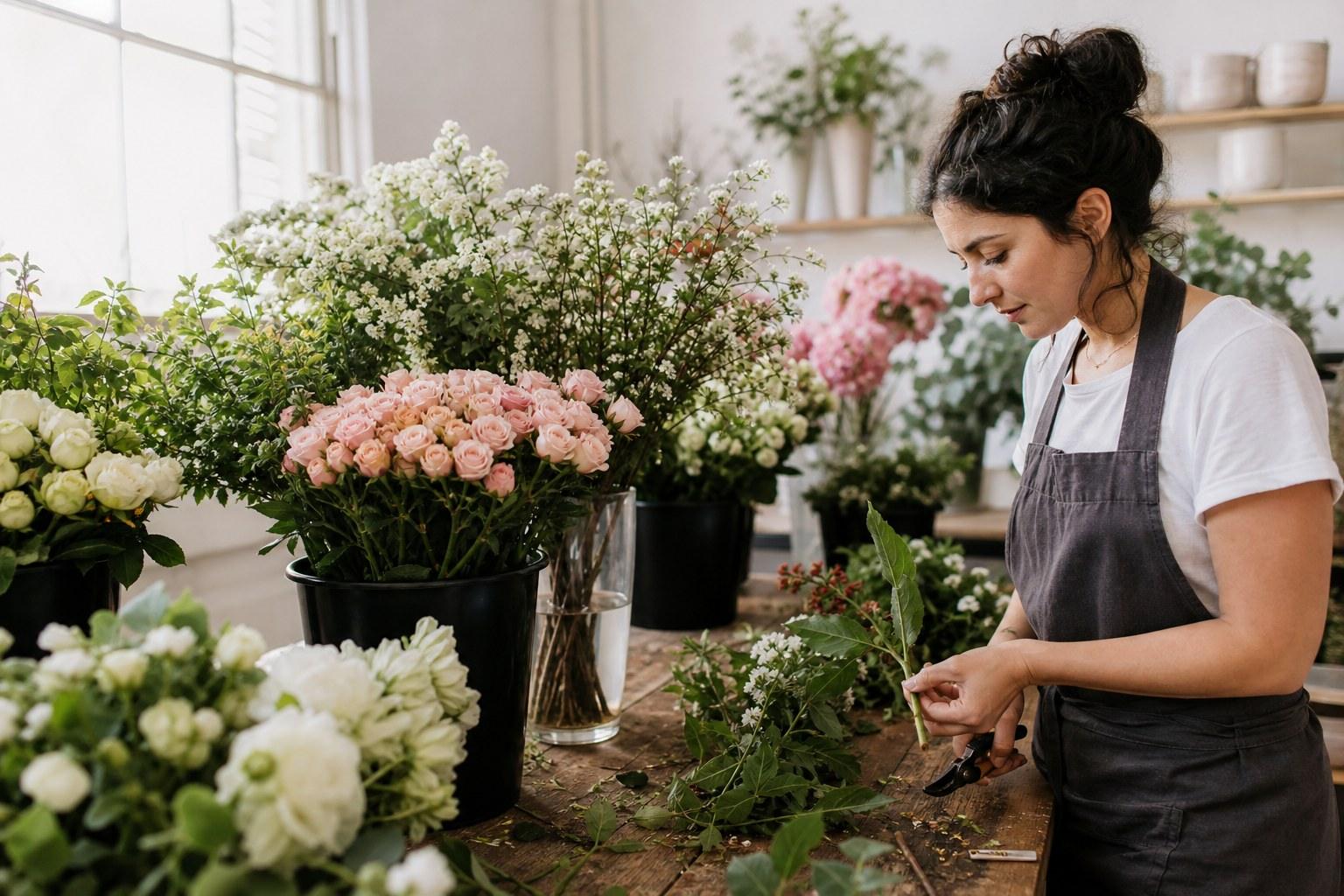
    Seasonal wedding flowers being conditioned in buckets in a florist workroom
    Condition everything on arrival. Vase life is won or lost in the first hour.

    How to substitute flowers without losing the design

    Substitution is a core florist skill, and it is not about finding a lookalike. It’s about identifying which quality the couple actually fell for.

    Break the reference image into qualities

    Ask yourself: is it the colour? The shape? The texture? The scale? The movement? A couple who loves a peony bouquet usually loves the ruffled volume in a soft blush. That can be delivered by garden roses, ranunculus, double tulips or dahlias depending on the season — none of which are peonies, all of which read the same in a photograph.

    Match the role, not the name

  • Focal — the big statement bloom. Swap peony for dahlia, garden rose or a full open ranunculus.
  • Secondary — supports and fills. Lisianthus, spray rose, astrantia, scabiosa.
  • Texture — the thing that makes it look designed. Seed heads, grasses, berries, herbs.
  • Line — creates movement and shape. Blossom, delphinium, jasmine vine, flowering branches.
  • Foliage — structure and volume, and the cheapest way to add scale.
  • Write substitution into your contract

    Every professional floral proposal should state that specific varieties are subject to seasonal availability and market conditions, and that you may substitute stems of equal value while maintaining the agreed colour palette and style. Say it upfront and it’s professional; say it two days before the wedding and it’s a problem.

    How to talk to couples about seasonal flowers

    Don’t say no. Say: “Here’s what that costs, and here’s what I’d do instead.” Couples are almost always reasonable once they understand the trade-off — they just don’t know that a flower has a season, because supermarkets have spent decades pretending otherwise.

  • Lead with the palette and the feeling, not a shopping list of stems. It gives you room to design.
  • Show seasonal examples from real weddings in that same month, so the reference set is achievable from the start.
  • If they truly want an out-of-season bloom, price it honestly as a line item and let them choose. Sometimes they will, and that’s fine.
  • Never promise a specific variety in writing unless you’ve confirmed availability with your grower or wholesaler.
  • The proposal conversation is a sales skill as much as a design one — our Certificate in Wedding Business & Marketing covers how to present and price your work with confidence.

    Ordering and conditioning: the unglamorous half

    Seasonality is only half the battle. The rest is handling.

  • Order more than your recipe requires. Stems get damaged, open too early or don’t open at all.
  • Condition on arrival: clean buckets, fresh water, cut stems at an angle, strip anything that would sit below the waterline, then rest them in a cool dark place.
  • Know which stems open slowly (roses, lisianthus) and which arrive ready (dahlias, anemones), and time your delivery accordingly.
  • Keep dahlias, hydrangeas and anything soft-stemmed out of heat and direct sun — before, during and after transport.
  • Build a hot-day plan: hydrated foam alternatives, water tubes, shaded storage on site and late-as-possible installation for anything delicate.
  • This is where most beginner mistakes live. A perfect seasonal recipe still fails if the flowers spent Friday afternoon in a hot car.
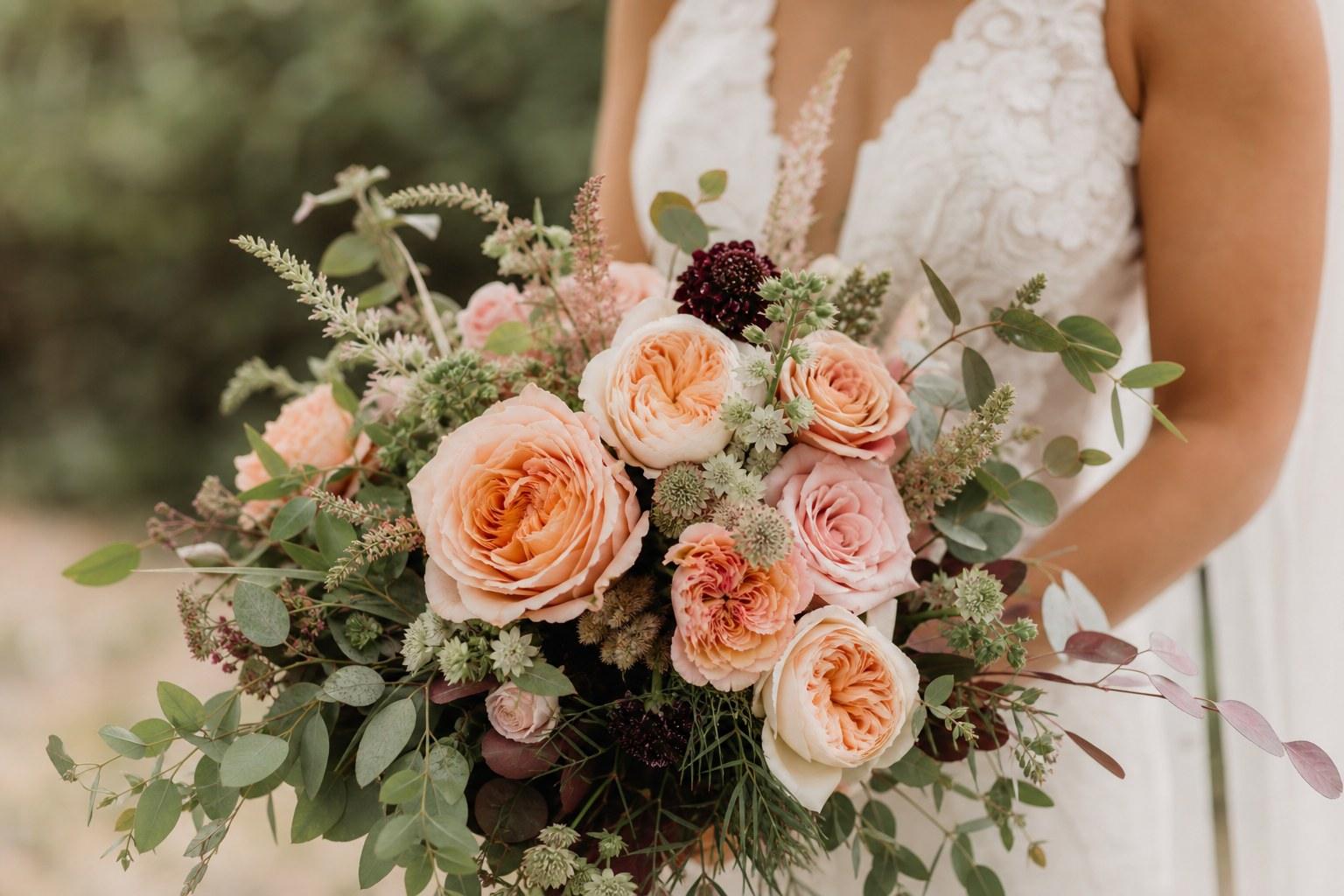
    Seasonal wedding bouquet of garden roses dahlias and textural foliage held by a bride
    Match the quality the couple loved — colour, shape, texture — not the exact variety.

    Common seasonal flower mistakes

  • Quoting from an inspiration image without checking availability. You’ve now promised something you may not be able to buy.
  • Copying northern-hemisphere content in the southern hemisphere. The season is inverted; the recipe won’t translate.
  • Underestimating foliage. It carries the volume, the structure and a huge amount of the visual impact for far less money.
  • Not accounting for the weather on the day. A 38°C forecast changes your entire stem list, not just your setup time.
  • Ignoring your local growers. Seasonal often means local, and local growers offer varieties wholesalers never carry.
  • Floral design sits alongside styling — if you want to design the whole room as well as the flowers, look at our Certificate in Wedding Styling.

    Frequently asked questions

    Are seasonal wedding flowers always cheaper?

    Usually, because they aren’t imported or forced, but not always — a bloom can be in season and still be expensive if it’s slow to grow or hard to transport. Season improves availability and quality reliably; cost usually follows.

    What flowers are available all year round?

    Roses, chrysanthemums, carnations, orchids, lisianthus, gypsophila and most foliage are farmed year-round in many markets. They’re the dependable backbone of a wedding recipe.

    What do I do if a couple wants peonies out of season?

    Explain the seasonality, quote the imported option honestly as a line item, and offer a designed alternative that delivers the same colour, shape and volume. Then let them decide.

    How far ahead should I order wedding flowers?

    Confirm the recipe and rough quantities with your wholesaler or grower well in advance, then finalise the order to their lead time. Speak to them early about anything unusual — that’s when substitutions are easy rather than urgent.

    Do I need a floristry qualification to do wedding flowers?

    There’s no legal requirement, but conditioning, mechanics, recipes, pricing and installation are technical skills. Training gets you there without learning on a couple’s wedding day.

    Your next step

    Seasonality isn’t a limitation, it’s a brief. The florists who work with it produce fresher, better-value, more cohesive weddings — and spend a lot less time apologising for substitutions.

    Our Certificate in Floral Design covers the mechanics, conditioning, recipe building and pricing behind professional wedding flowers, so you can quote with confidence in any season.

    [the_ad id="95636"]
    Search

    Our Friends

    [the_ad id="96118"]
    [the_ad id="95640"]
    [the_ad id="95916"]
    [the_ad id="95918"]
    [the_ad id="95923"]

    David Tutera

    Wedding Academy | The Spring 2018 Pantone Colour Trend Challenge

    Leading Wedding & Entertaining Expert, David Tutera is hailed as an artistic visionary whose ability, uniquely creative talents and outstanding reputation have made him a tremendous success in the lifestyle arena. Tutera has created a name for himself by taking his passion for designing spectacular events and transforming it into a lifestyle.

    He continuously exceeds the expected with an unmatched level of inspiration, imagination and innovation to create the latest trends in entertaining. Tutera’s grandfather, a successful florist, first noticed his grandson’s artistic ability at an early age and encouraged David to pursue his destiny. At age 19, with the sound advice of his grandfather and only one client, David opened his own event planning business.

    Today, David Tutera presides over an award winning company built from experience, dedication and Tutera’s natural talent for transforming the ordinary into the extraordinary. His name has become synonymous with style, elegance, creativity and vision. David Tutera has a natural talent for transforming the ordinary into the extraordinary. His name has become synonymous with style, elegance, creativity and vision.

    Honored by Life & Style Magazine as “Best Celebrity Wedding Planner,” David’s impressive client list includes Jewel, Star Jones’ wedding, Real Housewife Taylor Armstrong’s wedding, Los Angeles Clippers’ Chris Paul’s wedding, NY Giants Antonio Pierce’s wedding, Shannen Doherty’s wedding and events for Jennifer Lopez, Matthew McConaughey, Brandy and Ray J, Jenni “JWoww” Farley, Lil’ Kim, the Official Post Grammy Parties in New York City, Elton John, Barbara Walters, the Rolling Stones, Nancy Reagan, Prince Charles, The White House, private events for the Vice President, Kenneth Cole, Tommy Hilfiger, Susan Lucci, The John F. Kennedy Center, as well as countless film premieres and celebrity parties for royalty, politicians and socialites.

    Tutera has also designed events for several charities including the Prevent Cancer Foundation, the Alzheimer’s Association, DIFFA (Design Industries Foundation Fighting Aids) and the Make-A-Wish Foundation. David has made guest appearances on Today, Extra!, Good Morning America, The View, CNN, The Rachael Ray Show, The Talk, Steve Harvey, Wendy Williams and many more. In addition People, USA Today, In Touch, Wall Street Journal, New York Times, In Style, Cosmopolitan, Redbook, Bridal Guide and Town & Country have all featured his work.

    Tutera has also made special television appearances in the popular daytime soap, The Young & the Restless and TV Land’s The Exes. David lives in Los Angeles with his husband Joey, daughter Cielo and their rescue dog Lucy.