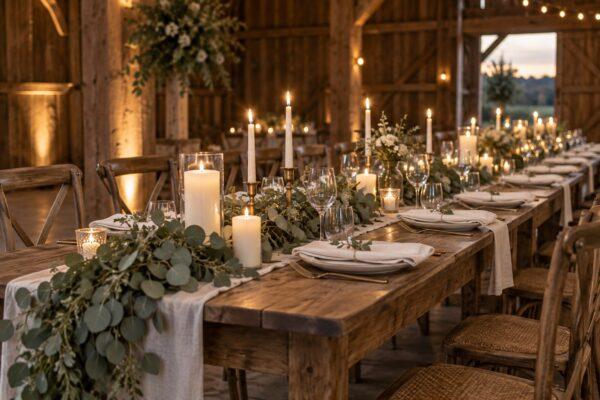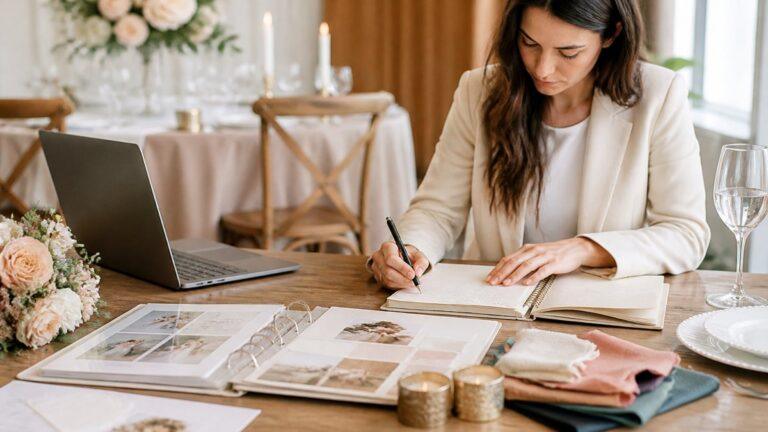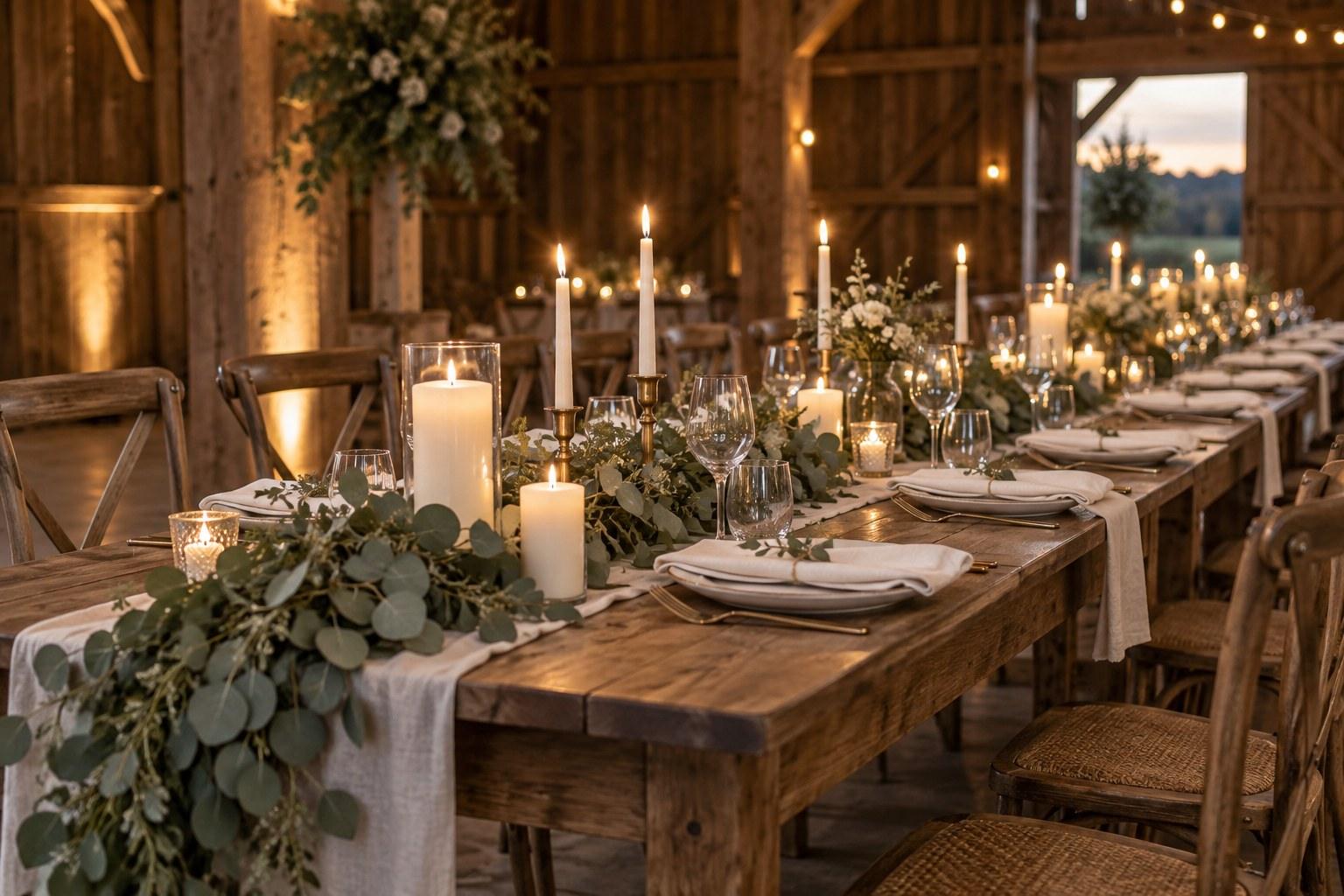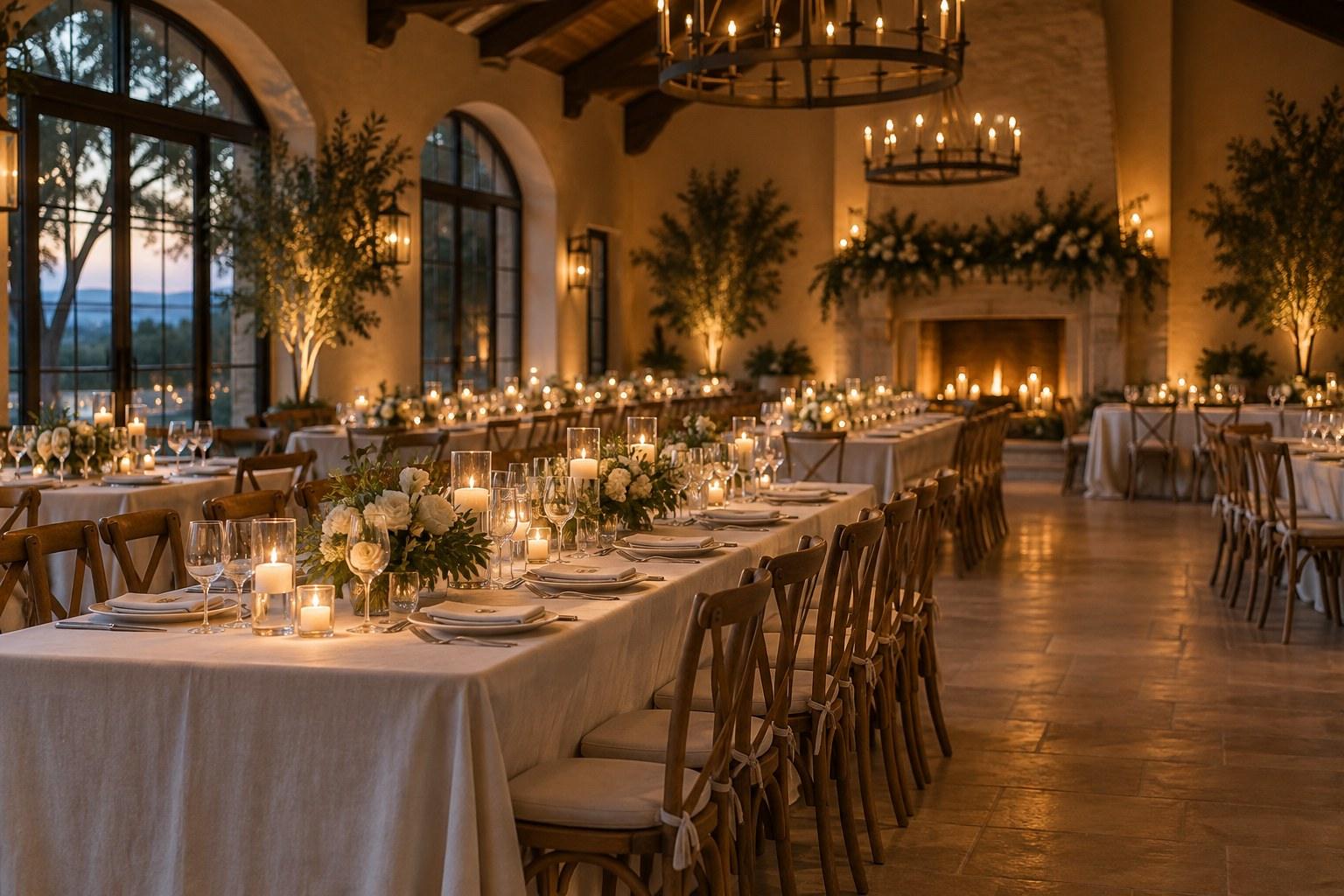
The vows are done, the confetti’s still in the air, and the couple is walking back up the aisle. Guests are hugging, crying, looking for a drink. And somewhere behind all that joy, you’ve got a room full of ceremony chairs that needs to become a dinner party — fast, quietly and without anyone seeing the mess.
That’s the wedding reception room flip. It’s one of the least glamorous and most revealing parts of a stylist’s job. Nobody posts the flip on Instagram — but everybody notices when it goes wrong.
Here’s how professional stylists plan and run a room flip when the ceremony and reception share one space — from designing for dual use to the run sheet that keeps your crew moving.
What is a wedding reception room flip?
A room flip (sometimes called a turnaround or changeover) is the reset between ceremony and reception when both happen in the same room or on the same lawn. Ceremony chairs come out or get repurposed, tables go in, linen and place settings land, florals move, lighting changes, and the room opens again looking like it was always meant to be a reception.
How long you get depends entirely on the day — the venue, the size of the room, the guest count, how many hands you have and what the couple has planned for cocktail hour. Some flips are generous. Some are genuinely tight. Your job is to design a flip that fits the window you’ve actually got, not the one you wish you had.
Design the room for dual use from the start
The best flips are won in the design meeting, months out. If you style the ceremony and reception as two separate concepts, you’ve just doubled your workload on the day. If you design them as one room with two moments, half the flip is already done.
Choose pieces that work twice
Ask of every item: can this serve both parts of the day? Ceremony chairs that match the reception chairs can simply be carried to tables. An arbour or backdrop can become the head table’s backdrop or the band’s frame. Aisle lanterns can move to the entry or line the dance floor. Welcome signage can flip to a seating chart on the reverse.
Plan the floor plan around the flip
Draw both layouts on the same floor plan and look at where things travel. If the ceremony faces one wall and the head table sits at the other end, you’re carrying the backdrop across the whole room. Could the couple say their vows where they’ll later sit? Could the reception tables be pre-positioned around the edges and simply pulled in?
Thinking in systems like this — design and logistics as one conversation — is at the heart of the Certificate in Wedding Styling. A beautiful concept that can’t be executed in the time available isn’t a finished concept.
Pre-set vs flip: decide what happens before guests arrive
Your single most powerful move is to shrink the flip itself. Everything you can set before the ceremony, you should — as long as it doesn’t look out of place during the vows. Sort every item into one of three lists:
- Pre-set: anything that can sit in the room during the ceremony without distracting — bar setup, lounge areas, cake table, dance floor, some lighting, table linen on tables stored at the sides.
- Staged: items prepped and ready just outside the room — place settings on trolleys, glassware racked by table, candles pre-filled, name cards sorted by table in labelled envelopes.
- Flip: only what genuinely has to move once guests leave — chairs, aisle décor, ceremony florals, the signing table, table placement.
| Item | Pre-set, staged or flip? | Stylist’s note |
|---|---|---|
| Bar, lounge and cake table | Pre-set | Position out of the ceremony sightlines or screen them |
| Table linen and runners | Pre-set or staged | Dress tables in advance if they can be stored at the room’s edges |
| Cutlery, glassware, napkins | Staged | Rack or tray by table number so the crew sets without sorting |
| Name cards and menus | Staged | Bundle by table in order of the seating plan |
| Candles | Staged | Pre-fill holders; light last, once tables are final |
| Ceremony chairs | Flip | Match to reception chairs where possible so they move straight to tables |
| Aisle and arbour florals | Flip | Design with mechanics that lift and travel cleanly |
| Signing table | Flip | Can become the gift, guest book or card table |
Be honest with yourself about the flip list. If it’s long, go back to the design and move things into pre-set or staged. That’s where calm flips come from.
Crew roles and briefing for a smooth room flip
A room flip isn’t a free-for-all where everyone grabs whatever’s closest. Unassigned crews bump into each other, double-handle items and leave gaps nobody noticed. Give every person one clear job.
Assign zones and tasks
- Flip lead: you, or your most senior stylist. Watches the clock, makes the calls, doesn’t get stuck carrying chairs.
- Heavy lift: chairs, tables, arbour, staging — often venue staff or hire crew.
- Table setters: linen, cutlery, glassware, napkins, working in a set direction across the room.
- Floral and décor: moving ceremony florals, placing centrepieces, candles.
- Detail finisher: name cards, menus, signage, final straightening and a last walk-through.
Brief before the ceremony, not during the flip
Gather the whole crew before guests arrive. Walk the room. Show them the finished table (set one as a sample — it’s worth its weight in gold). Point out where staged items live and where cleared items go. Agree on a signal for “we’re starting” and “doors open”. Once the flip starts, there’s no time for questions you could have answered an hour earlier.
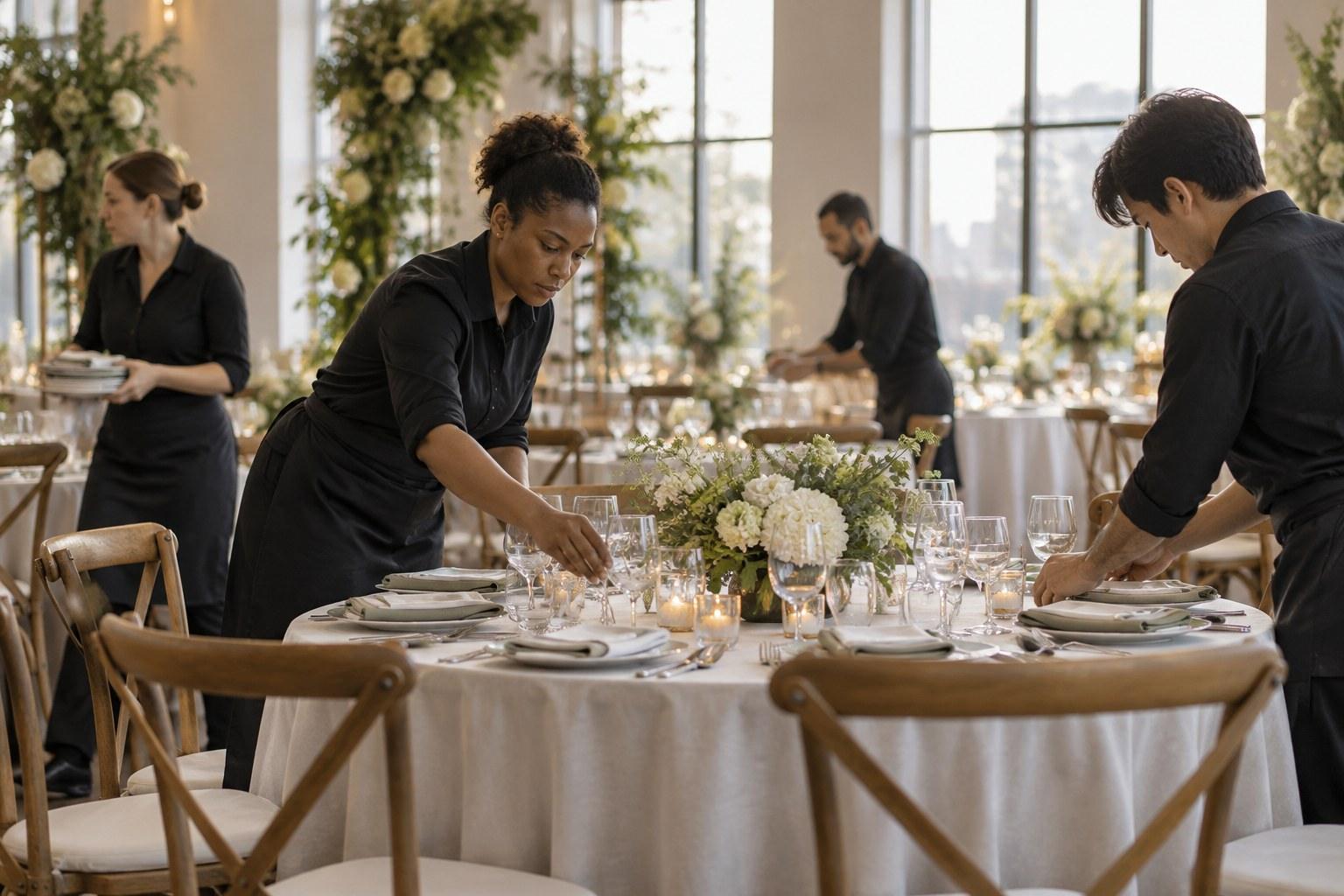
How to write a room flip run sheet
Your main wedding day run sheet will show the flip as one line. That’s not enough. Write a separate flip run sheet that breaks the changeover into sequenced steps, each with an owner. A simple structure:
- Clear: guests out, ceremony chairs, aisle runner, aisle décor and signing table removed or repurposed.
- Place: tables in position, checked against the floor plan and service paths.
- Dress: linen, runners, chairs to tables.
- Set: cutlery, glassware, napkins, name cards, menus.
- Style: centrepieces, moved ceremony florals, candles, final décor.
- Light: lighting to reception state, candles lit.
- Check: walk-through, fix, and signal doors open.
Rather than inventing a clock time for every step, estimate each one against your real room and crew, then build in a buffer. After a few weddings you’ll know your own pace. Until then, rehearse a table setting and time yourself honestly.
Moving florals from the aisle to the reception tables
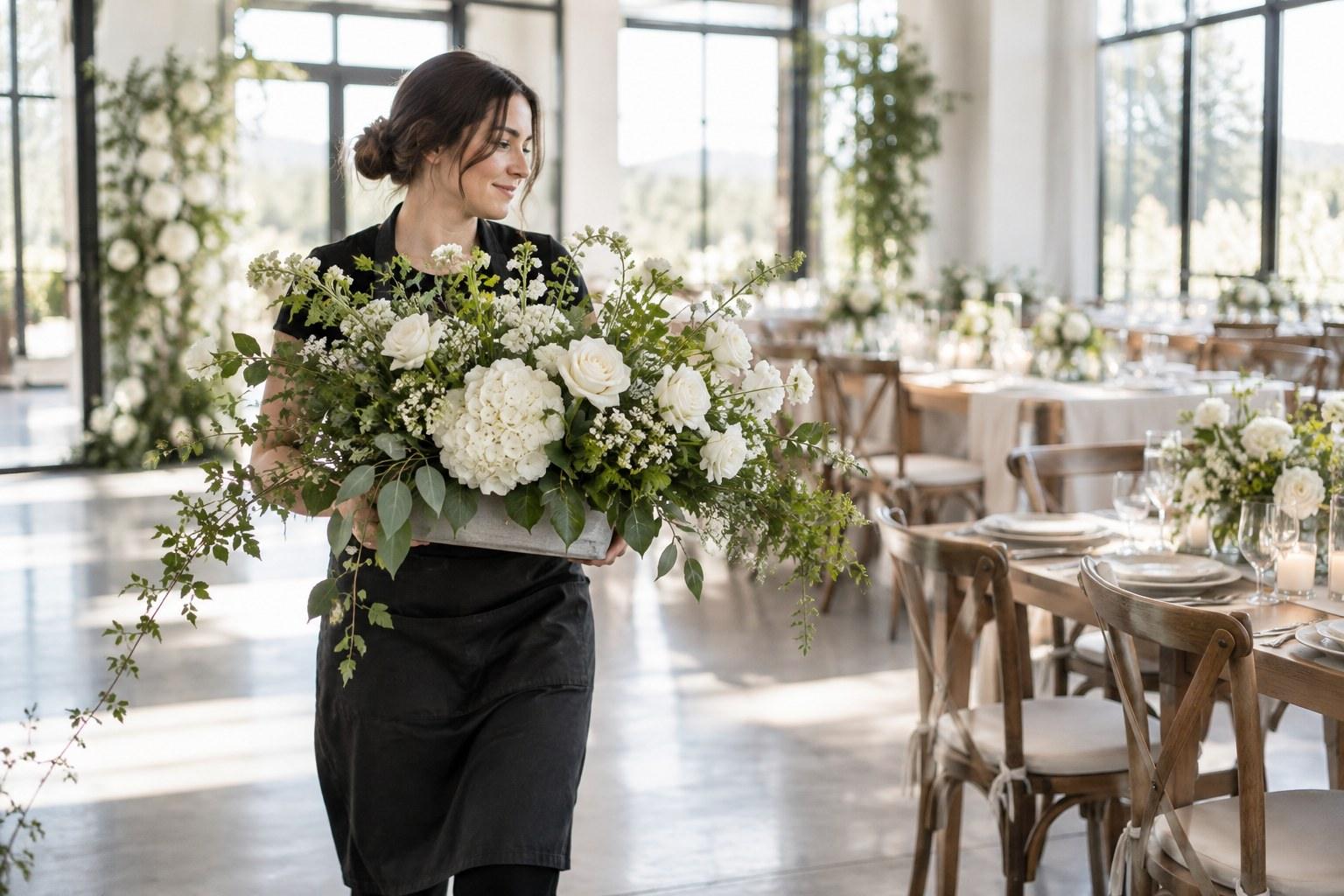
Reusing ceremony flowers is smart styling and smart budgeting for the couple — but only if it’s designed in. Aisle arrangements built in low vessels or on removable bases can travel straight to the tables as centrepieces or to the bar and cake table. Arbour florals built in modular sections can be lifted and laid along the head table.
What doesn’t work: arrangements that are wired into a structure and have to be deconstructed on the spot, pieces sized for a long aisle view that look enormous on a dinner table, and anything that drips. Talk to your florist early about mechanics and vessel choice. If you’re the stylist and florist in one, the Certificate in Floral Design goes deeper into building arrangements that travel.
Where do guests go during the room flip?
Guests must be out of the room and happy somewhere else. That’s usually cocktail hour, and it’s the planner’s and venue’s territory as much as yours — so coordinate. The holding area needs drinks, food, shade or warmth, seating for older guests and bathrooms nearby. Ideally it’s somewhere the guests can’t see into the reception room.
Give the holding area a little styling love too: a lounge setting, a welcome sign, a bar that looks intentional. Guests who feel looked after don’t notice that they’re being kept out of a room. Make sure the photographer, the planner and the venue all know the flip window so nobody walks the couple back in early.
Lighting changes: from ceremony to reception
Ceremonies often want bright, even light for photos. Receptions want warmth and intimacy. The lighting shift is one of the fastest ways to make the flip feel like a transformation — and it’s usually the easiest to prepare in advance. Pre-program lighting states with your AV or lighting supplier if the venue allows it, test them before guests arrive, and agree who presses the button. Candles go on last, once tables are final, never before chairs are still being carried past.
What to cut when the room flip runs short
Ceremonies run late. Photos run long. Sometimes the flip window shrinks on the day. Decide your priority list in advance so you’re not making it up under pressure:
- Never cut: tables in position, chairs, place settings, name cards for assigned seating, safety (clear paths, taped cables, stable candles).
- Simplify: fewer candles, centrepieces placed without fussing, menus bundled at each setting instead of individually styled.
- Finish after doors open: secondary décor in the lounge or entry, final touches to the dessert table — discreetly, while guests find their seats.
Working with venue staff on the room flip
Many venues run flips all the time and have their own crews and systems. Respect that. Ask early: who moves furniture, who sets tables, what’s included in the venue package and what’s on you? Share your floor plan, your flip run sheet and your sample table well before the day. Confirm access times, storage for staged items and where cleared ceremony pieces go.
On the day, introduce yourself to the venue coordinator, agree on one point of contact each and get out of their way where they’re the experts. The best flips feel like one team, not two groups competing for the same trolley.
Want the full toolkit — concept design, floor plans, run sheets and supplier coordination? It’s all inside the Certificate in Wedding Styling, and if you want to run the whole day end to end, pair it with the Certificate in Wedding Planning.
Wedding reception room flip FAQs
How long does a wedding reception room flip take?
It depends on the venue, the room size, the guest count, the size of your crew and how much you’ve pre-set. Plan your flip around the window the couple’s timeline actually allows, move as much as possible into pre-set and staged lists, and build in a buffer.
Can you reuse ceremony flowers at the reception?
Yes — if they’re designed to move. Aisle arrangements in low vessels or on removable bases can become centrepieces or bar florals, and modular arbour pieces can dress the head table. Plan the mechanics with your florist early.
What should be pre-set before the ceremony?
Anything that won’t distract from the vows: the bar, lounge areas, cake table, dance floor, lighting states and, where space allows, dressed tables stored at the room’s edges. Place settings, name cards and candles should be staged outside the room, sorted by table.
Where do guests wait during the room flip?
Usually at cocktail hour in a separate space with drinks, food, seating and bathrooms nearby, ideally out of view of the reception room. Coordinate with the planner and venue so everyone knows the flip window.
Who is responsible for the room flip — the stylist or the venue?
It varies by venue and contract. Often the venue’s staff move furniture and the stylist handles décor, florals and table styling, but you must confirm it in writing well before the day and share your flip run sheet with the venue.
Ready to style rooms that transform on cue? Enrol in the Certificate in Wedding Styling and learn the design and logistics that make it look effortless. ✨