

Every wedding has a moment where the plan meets reality. The ceremony musician is stuck in traffic, the celebrant wants to move the signing table, the caterer needs a decision about canapés right now — and the couple is somewhere upstairs having their hair done, blissfully unaware. The person who absorbs all of that is the day-of wedding coordinator.
It is one of the most in-demand roles in the industry, and one of the most misunderstood. Couples who planned their own wedding still need someone to run it. Venues want a professional on site. And for anyone building a wedding business, day-of coordination is often the fastest way to get real weddings on your résumé without needing a twelve-month planning contract to do it.
Here’s what the role actually involves, how to price it, and how to get your first bookings. If you want the full framework behind it, our Certificate in Wedding Planning teaches the systems professional coordinators run on.
What does a day-of wedding coordinator actually do?
The name is a lie, and every coordinator will tell you so. Nobody turns up on the morning of a wedding, reads a folder and runs the day. Real day-of coordination — sometimes called on-the-day coordination or wedding management — starts four to six weeks out.
In that handover period you take a couple’s half-finished plan and turn it into something executable. You read every supplier contract. You confirm arrival windows. You build the run sheet. You walk the venue. Then on the day itself you are the single point of contact for every supplier, so the couple never has to answer a question about bin collection while they’re in a robe drinking champagne.
What it is not: design, styling, budget management, supplier sourcing or months of planning meetings. That is full planning, and it should be priced as a different service entirely.
Day-of coordination vs full wedding planning
| Day-of coordination | Full planning | |
|---|---|---|
| Starts | 4–6 weeks out | 9–18 months out |
| Supplier sourcing | No — already booked | Yes |
| Budget management | No | Yes |
| Design direction | Executes the couple’s plan | Creates the concept |
| Run sheet | Yes — you build it | Yes |
| On-site on the day | Yes | Yes |
Be ruthless about that line. The single biggest cause of unprofitable coordination work is scope creep — you quote a day-of package, then quietly find yourself sourcing a new florist in month three for free.
How to become a day-of wedding coordinator
1. Learn the systems before you learn on someone’s wedding
Coordination is not improvisation. It is documents. A run sheet template, a supplier contact sheet, a floor plan, a wet weather plan, an emergency kit list and a handover questionnaire. Build those before your first booking, not during it. Our wedding planning certificate walks through each of these documents with the logic behind them, so you’re not copying a template you don’t understand.
2. Get on-site experience however you can
Assist an established planner. Ask venues whether they need casual event staff. Offer to shadow a coordinator for free on a Saturday. One full day watching how a professional handles a delayed ceremony teaches you more than a month of reading.
3. Build the emergency kit
Safety pins, sewing kit, stain remover, blister plasters, scissors, double-sided tape, superglue, cable ties, a phone charger, painkillers, tissues, spare batteries for the celebrant’s microphone, a lighter, and a torch for pack-down. You will use most of it eventually, and the day you don’t have it is the day you need it.
4. Write a contract before you take a deposit
Your contract needs scope, hours, arrival and departure times, what happens if the wedding runs over, cancellation and postponement terms, and a clear statement that you are not responsible for the performance of suppliers you didn’t book. Sort this out before booking one, not after a bad experience.
5. Do a real walkthrough
Two to four weeks out, walk the venue with the couple. Stand where the ceremony will happen. Ask where guests will wait for drinks, where the wet weather ceremony would go, and how long it takes to walk from the ceremony lawn to the reception room. Timings in your head are wrong until you have physically walked them.
How to price day-of wedding coordination
There is no universal number — it depends on your market, your experience and the size of the wedding — but there is a right method. Price the whole scope, not the wedding day.
Add up every hour you will actually work: the handover meeting, supplier confirmation emails, the run sheet build, the venue walkthrough, the rehearsal if you attend one, the wedding day itself (usually 10–14 hours), pack-down, and travel. Multiply by the hourly rate you need to run a viable business, then add a contingency buffer, because coordination weddings always take longer than the sunny estimate.
If pricing and packaging is the part that makes you sweat, that’s a business skill rather than a wedding skill — the Certificate in Wedding Business & Marketing covers packaging, pricing structure and the sales conversation.
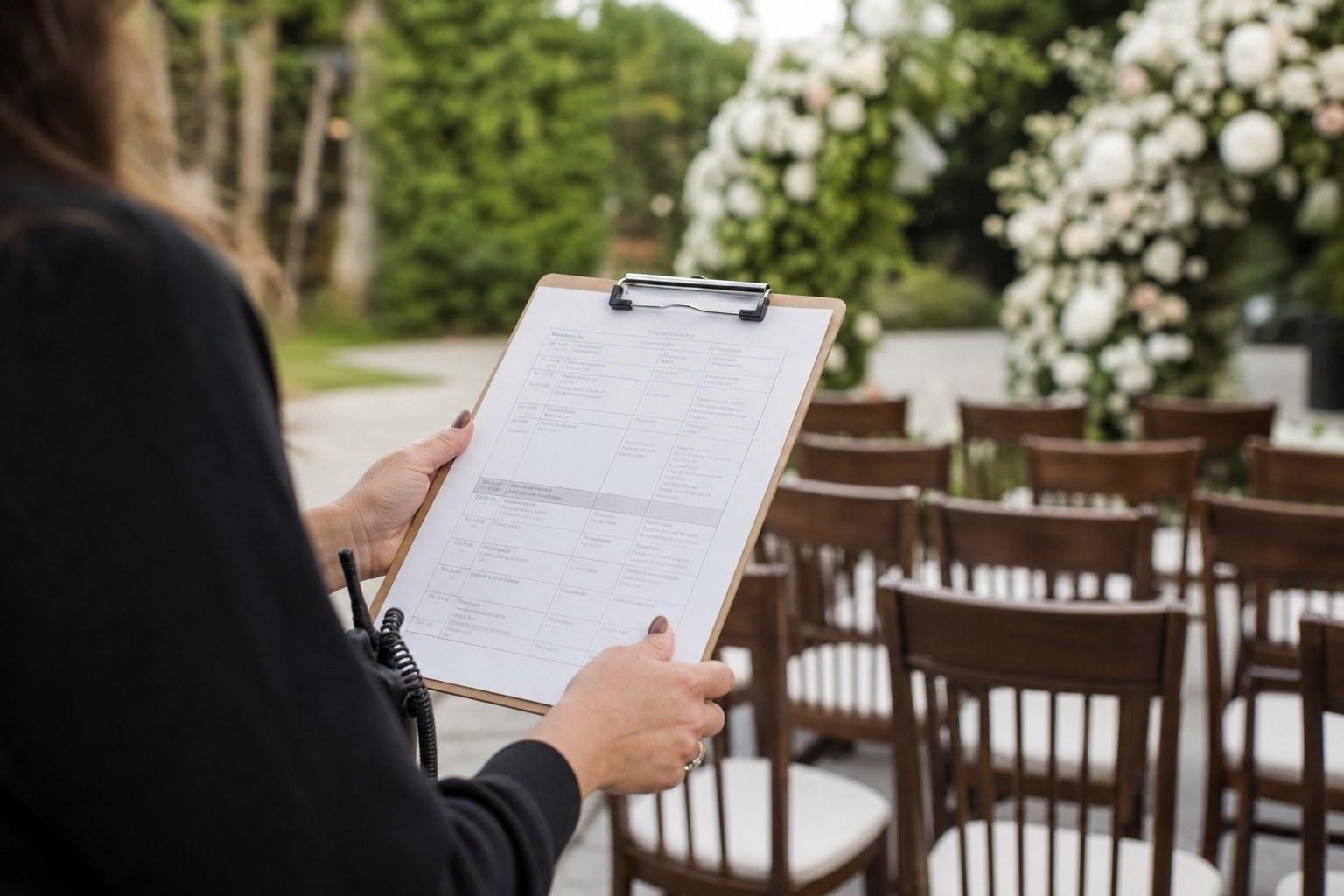
The wedding day run sheet: your entire job in one document
Build it backwards from the anchors that cannot move: the ceremony start time, the sunset (for photos), and the venue’s hard finish time. Everything else flexes around them.
A working run sheet has a column for time, a column for what’s happening, and a column for who is responsible. Every supplier gets a version. The bridal party gets a simplified version with their own timings only — hand a groomsman a fourteen-page document and he will read none of it.

How to get your first day-of coordination bookings
Venues are your best referral source, by a distance. A venue coordinator manages the building; they do not manage the couple’s suppliers or run the family’s day. Introduce yourself properly: email the venue manager, offer to meet on a quiet weekday, bring your run sheet template and show them you make their Saturdays easier.
After that, photographers. A photographer who has shot a wedding you coordinated will recommend you forever, because a well-run timeline is the difference between good light and rushed portraits.
Ready to build the full skill set — planning, styling and business together? The Advanced Certificate in Wedding Planning, Styling and Business is the deep-end option.
Common day-of coordination mistakes
Frequently asked questions
Is day-of coordination the same as wedding management?
Effectively yes. Many planners have moved to the term ‘wedding management’ precisely because ‘day-of’ undersells the four to six weeks of preparation involved.
Do I need a qualification to be a wedding coordinator?
There is no legal requirement, but couples and venues are handing you their most important day. A certificate shows you have been trained in run sheets, contracts, supplier management and risk — and it gives you a document library to work from on day one.
How many weddings can I coordinate in a weekend?
One. Coordination days run 10–14 hours and finish with pack-down. If you want volume, grow a team rather than stacking Saturdays.
What happens if a supplier doesn’t turn up?
You escalate immediately, you work the problem quietly, and you keep the couple informed only once you have options to offer. That is why your run sheet carries every phone number and why you build relationships with local suppliers before you need them.
Can I offer coordination while working a full-time job?
Many people start exactly that way. Weddings are weekends; the handover work is evenings and email. It’s demanding but it’s the most common path into the industry.
Your next step
Day-of coordination is the cleanest entry point in the wedding industry: shorter contracts, real on-site experience, and a service couples genuinely need. The only thing standing between you and your first booking is a professional set of systems — and knowing how to walk into a venue meeting sounding like someone who has done this before.
That is exactly what our Certificate in Wedding Planning is built to give you: the documents, the process and the confidence to run someone’s wedding day properly.



