
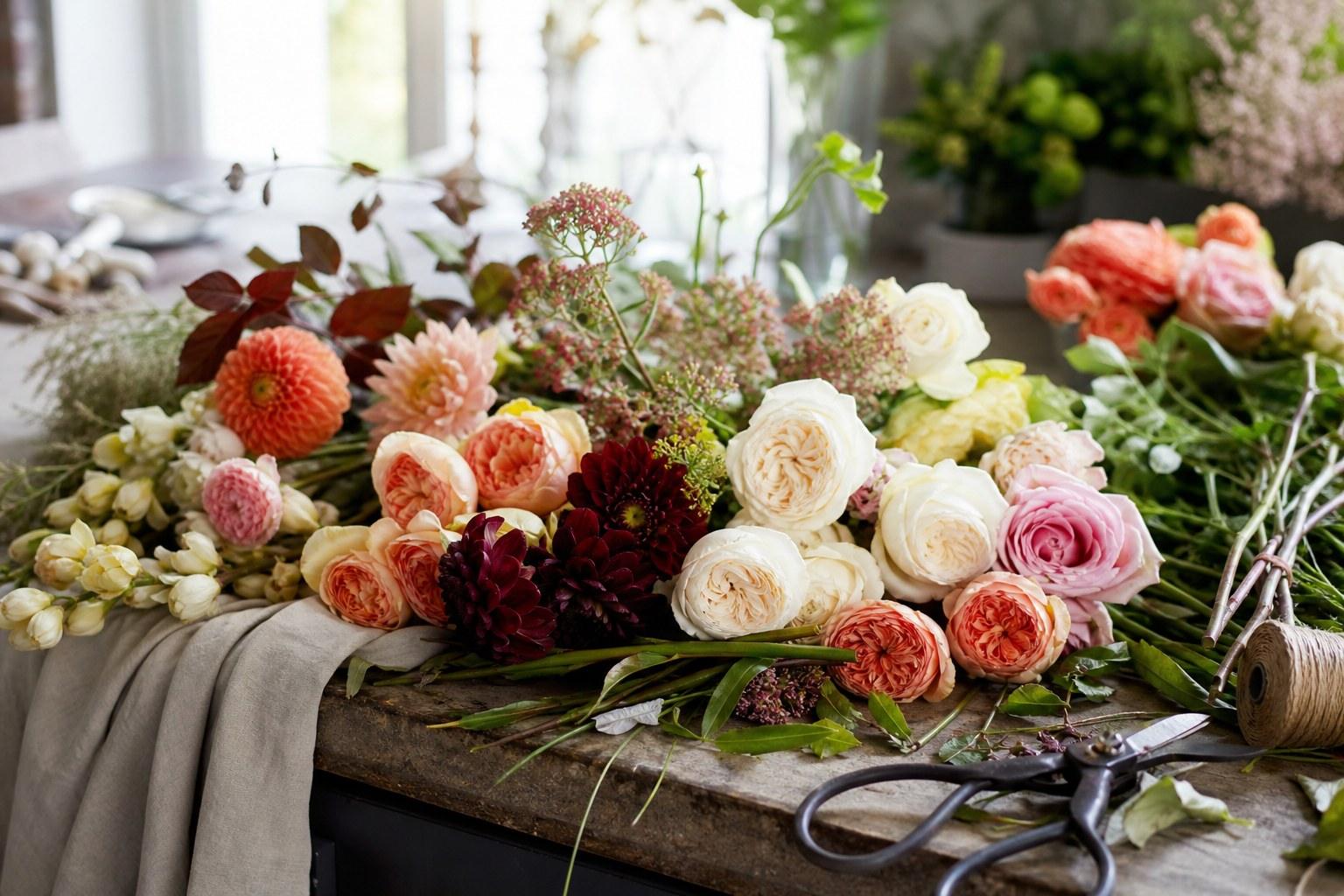
A couple sends you an image of a bouquet stuffed with peonies. Their wedding is in March. In the southern hemisphere. You now have a choice: import them at a cost that will eat the entire floral budget, quietly substitute and hope nobody notices, or have an honest conversation about seasonality.
Choosing wedding flowers by season is the single biggest lever a florist has over cost, quality and stress. In-season blooms are fresher, cheaper, more available and far more likely to survive a hot day. Out-of-season blooms are none of those things.
Here’s how to think about seasonal wedding flowers, how to substitute without losing the look, and how to have the conversation with couples. If you want the craft behind it, our Certificate in Floral Design teaches mechanics, conditioning and design.
Why seasonal wedding flowers matter
Note the geography trap: most wedding inspiration online is northern-hemisphere. If you’re in Australia or New Zealand, a “June wedding” pin is a winter wedding to you. Always translate the season before you translate the flowers.
Wedding flowers by season: what to expect
Availability varies by climate, country and grower, so treat this as a starting point and confirm with your local wholesaler every single time.
| Season | Typically abundant | Design character |
|---|---|---|
| Spring | Ranunculus, tulips, anemones, sweet pea, blossom branches, lilac, freesia | Soft, movement-led, pale and fresh |
| Summer | Garden roses, dahlias, hydrangea, delphinium, zinnia, jasmine, herbs | Full, generous, saturated colour |
| Autumn | Dahlias, chrysanthemum, amaranthus, seed heads, berries, turning foliage | Textural, warm-toned, sculptural |
| Winter | Hellebores, anemones, ranunculus, evergreen foliage, dried elements, camellia | Deep, restrained, structural |
Some flowers — roses, chrysanthemums, carnations, orchids, lisianthus, gypsophila and much foliage — are farmed year-round and available almost always. They are the backbone of a reliable wedding recipe. Build your structure from those, then use genuinely seasonal stems as the accents that give the arrangement its personality.
How to substitute flowers without losing the design
Substitution is a core florist skill, and it is not about finding a lookalike. It’s about identifying which quality the couple actually fell for.
Break the reference image into qualities
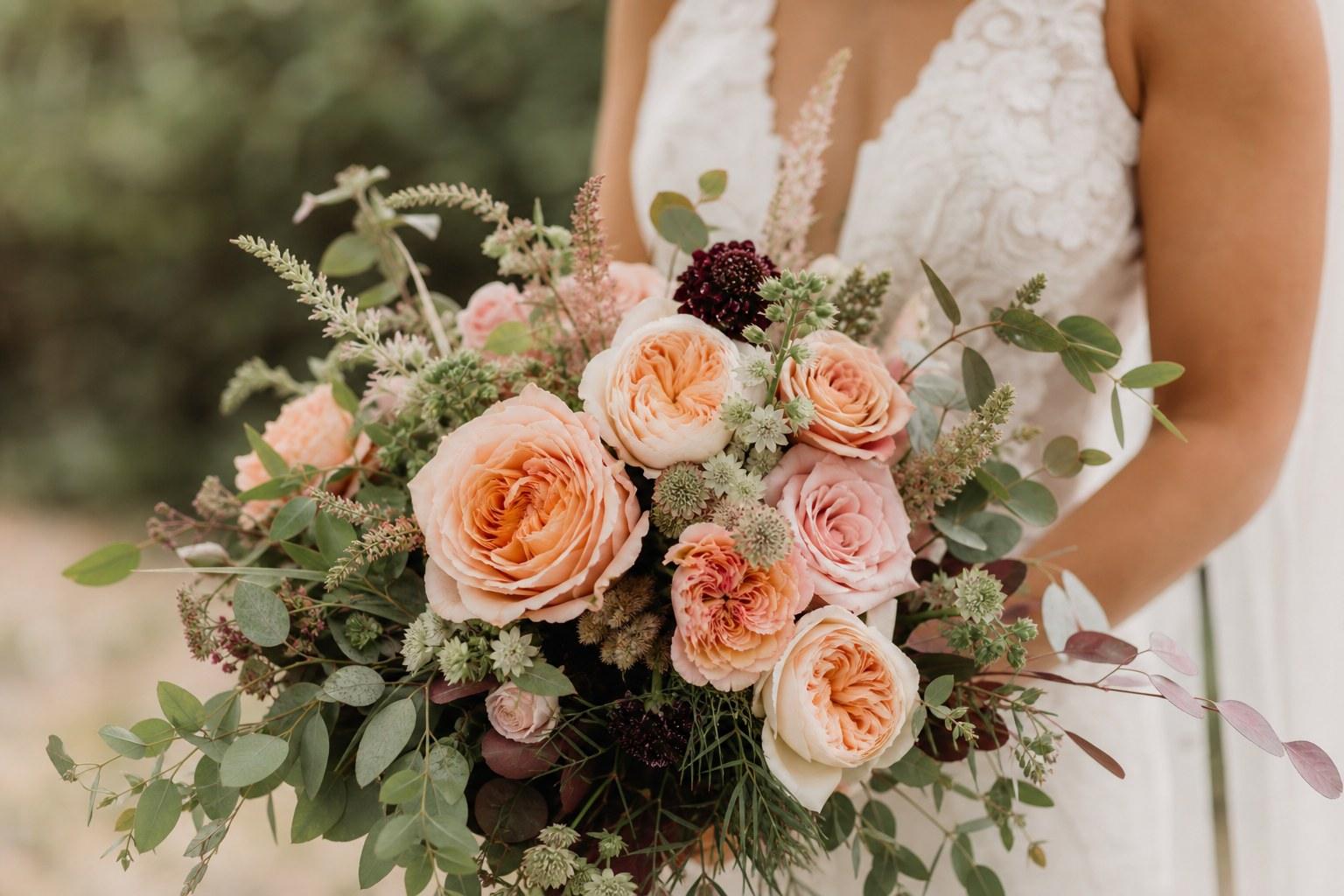
Ask yourself: is it the colour? The shape? The texture? The scale? The movement? A couple who loves a peony bouquet usually loves the ruffled volume in a soft blush. That can be delivered by garden roses, ranunculus, double tulips or dahlias depending on the season — none of which are peonies, all of which read the same in a photograph.
Match the role, not the name
Write substitution into your contract
Every professional floral proposal should state that specific varieties are subject to seasonal availability and market conditions, and that you may substitute stems of equal value while maintaining the agreed colour palette and style. Say it upfront and it’s professional; say it two days before the wedding and it’s a problem.
How to talk to couples about seasonal flowers
Don’t say no. Say: “Here’s what that costs, and here’s what I’d do instead.” Couples are almost always reasonable once they understand the trade-off — they just don’t know that a flower has a season, because supermarkets have spent decades pretending otherwise.
The proposal conversation is a sales skill as much as a design one — our Certificate in Wedding Business & Marketing covers how to present and price your work with confidence.
Ordering and conditioning: the unglamorous half
Seasonality is only half the battle. The rest is handling.
This is where most beginner mistakes live. A perfect seasonal recipe still fails if the flowers spent Friday afternoon in a hot car.
Common seasonal flower mistakes
Floral design sits alongside styling — if you want to design the whole room as well as the flowers, look at our Certificate in Wedding Styling.
Frequently asked questions
Are seasonal wedding flowers always cheaper?
Usually, because they aren’t imported or forced, but not always — a bloom can be in season and still be expensive if it’s slow to grow or hard to transport. Season improves availability and quality reliably; cost usually follows.
What flowers are available all year round?
Roses, chrysanthemums, carnations, orchids, lisianthus, gypsophila and most foliage are farmed year-round in many markets. They’re the dependable backbone of a wedding recipe.
What do I do if a couple wants peonies out of season?
Explain the seasonality, quote the imported option honestly as a line item, and offer a designed alternative that delivers the same colour, shape and volume. Then let them decide.
How far ahead should I order wedding flowers?
Confirm the recipe and rough quantities with your wholesaler or grower well in advance, then finalise the order to their lead time. Speak to them early about anything unusual — that’s when substitutions are easy rather than urgent.
Do I need a floristry qualification to do wedding flowers?
There’s no legal requirement, but conditioning, mechanics, recipes, pricing and installation are technical skills. Training gets you there without learning on a couple’s wedding day.
Your next step
Seasonality isn’t a limitation, it’s a brief. The florists who work with it produce fresher, better-value, more cohesive weddings — and spend a lot less time apologising for substitutions.
Our Certificate in Floral Design covers the mechanics, conditioning, recipe building and pricing behind professional wedding flowers, so you can quote with confidence in any season.



